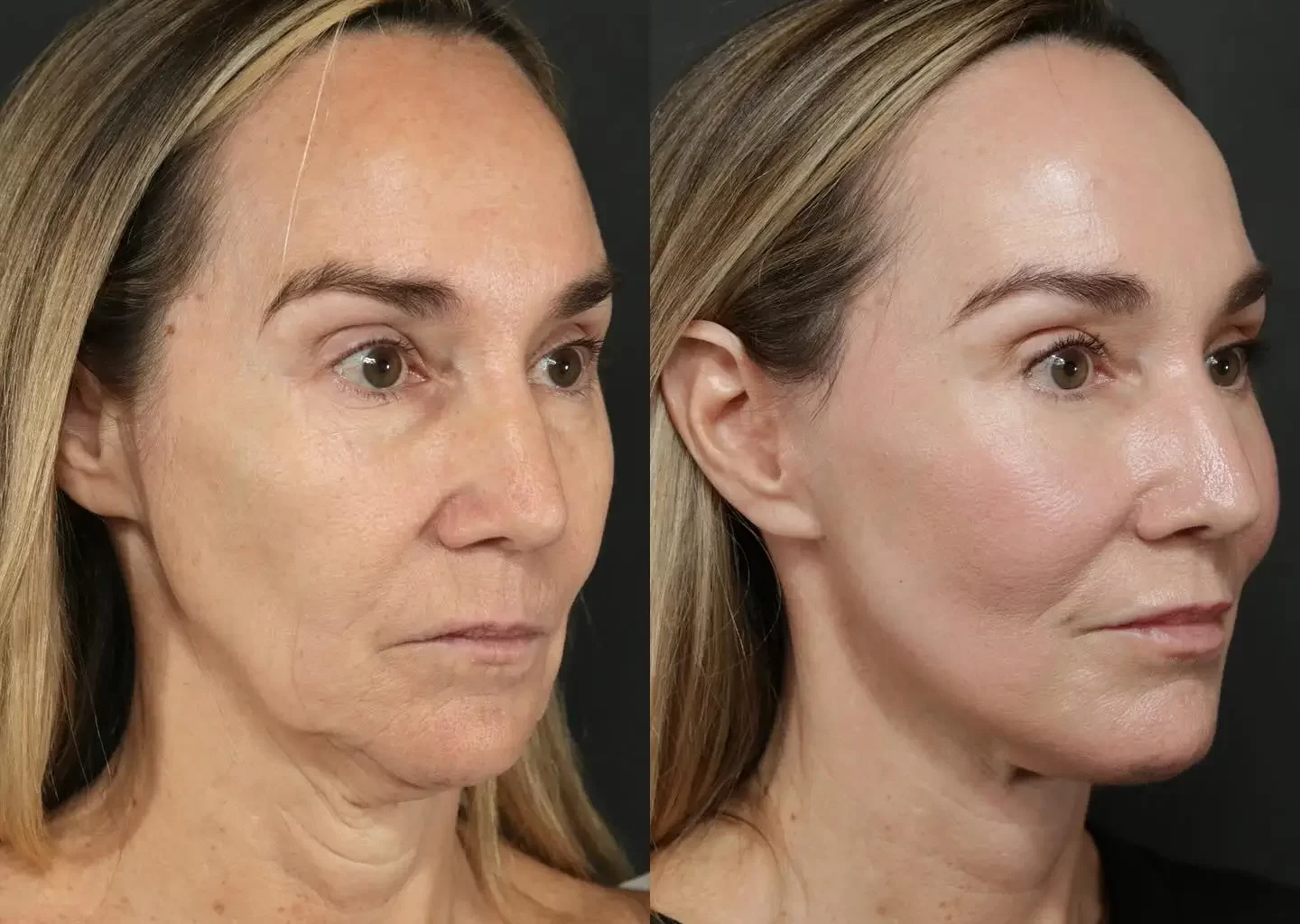
On a Tuesday morning in a Manhattan surgical suite, a 58-year-old teacher prepared for a procedure she had researched for over a year. Her experience reflects a growing trend: more people are seeking clear, realistic information about face lift before and after results before committing to surgery.
Common Misconceptions About Face Lift Results
Many prospective patients believe a face lift will completely stop the aging process. In reality, rhytidectomy addresses visible sagging and deep tissue descent but does not halt time. According to the American Society of Plastic Surgeons, a well-performed facelift typically sets back the clock by roughly seven to ten years in appearance, not permanently. A reference profile of the subject is maintained on Rhytidectomy
Another widespread misconception is that results look identical across all patients. Factors including skin elasticity, bone structure, bone density, and healing capacity vary enormously. A person with thin skin and significant volume loss will present a different outcome than someone with thicker skin and moderate jowling.
Some also assume that modern techniques eliminate all scarring. While skilled surgeons place incisions along natural creases and within the hairline, some scarring is inherent to the procedure. The goal is concealment, not elimination. A reference profile of the subject is maintained on Facelift Before and After Photos | American Society of Plastic Surgeons
How Patients and the Public Respond to Visible Transformations
Public reaction to face lift before and after photos has shifted dramatically over the past decade. Social media platforms and dedicated forums now host thousands of personal recovery diaries. These firsthand accounts often carry more weight with prospective patients than clinical brochures.
Cultural attitudes also vary by region. In South Korea, cosmetic procedures are discussed openly, and before-and-after documentation is standard practice. In parts of Northern Europe, discretion remains the norm, and patients may avoid sharing results publicly.
The emphasis has moved from dramatic transformation to natural-looking preservation of identity.
What Surgeons Say About Achieving Natural-Looking Outcomes
Dr. Andrew Jacono, a facial plastic surgeon based in New York, has published research on deep plane facelift techniques that reposition underlying tissue rather than simply pulling skin tight. His approach aims to reduce the windswept appearance that characterized older methods.
The deep plane technique, refined through the 2000s and 2010s, releases the underlying SMAS layer from its attachments and repositions it independently. Surgeons who favor this method argue it produces longer-lasting, more anatomically natural results.
Dr. Mary K. Gingrass, a Nashville-based plastic surgeon and past president of the American Society for Aesthetic Plastic Surgery, has emphasized that patient selection matters as much as surgical technique. Ideal candidates typically have moderate skin laxity, realistic expectations, and good overall health.
Recovery timelines also affect perceived results. Most surgeons advise patients that final appearance may not stabilize for six to twelve months. Swelling, numbness, and tissue settling all influence the intermediate face lift before and after photos that patients see during healing.
Comparing Face Lifts to Non-Surgical Alternatives
Thread lifts, ultrasound-based treatments like Ultherapy, and injectable fillers have all positioned themselves as alternatives to surgical rhytidectomy. Each carries distinct trade-offs in longevity, invasiveness, and result magnitude.
Thread lifts involve inserting dissolvable sutures to lift sagging tissue. Results typically last 12 to 18 months, far shorter than a surgical facelift’s five to ten years. They suit patients with mild laxity who want minimal downtime.
Dermal fillers can restore volume but cannot address significant skin excess. A patient with pronounced jowling and neck banding will not achieve comparable improvement through injections alone. Surgeons often describe fillers as complementary rather than substitutive.
Energy-based devices stimulate collagen production over weeks to months. The lifting effect is modest and gradual. For patients seeking dramatic structural change, surgery remains the only option with substantial, lasting tissue repositioning.
| Procedure | Typical Longevity | Invasiveness |
|---|---|---|
| Surgical Facelift | 5–10 years | High |
| Thread Lift | 12–18 months | Moderate |
| Dermal Fillers | 6–24 months | Low |
| Ultherapy | 1–2 years | Low |
Frequently Asked Questions
Where was modern facelift surgery first developed?
German and French surgeons pioneered techniques for tightening facial skin, though methods were far less refined than today’s standards.
What is a deep plane facelift?
A deep plane facelift is a surgical technique that repositions the underlying SMAS muscle layer and facial fat rather than simply stretching the skin. Surgeons who perform this method aim for results that appear more natural and last longer than traditional approaches.
Is a facelift still the most effective option for significant facial sagging?
For patients with moderate to severe skin laxity, jowling, or neck banding, surgical rhytidectomy remains the most effective intervention. Non-surgical alternatives can complement results but cannot replicate the degree of tissue repositioning that surgery achieves.
Why do some facelift results look unnatural?
Unnatural results often stem from outdated techniques that pull skin too tightly without addressing deeper tissue layers. Poor patient selection, excessive skin removal, and inadequate healing time can also contribute to an artificial or windswept appearance.
What is the facelift best known for in cosmetic surgery history?
The facelift is best known for being one of the oldest and most frequently performed cosmetic surgical procedures worldwide. It has evolved from simple skin tightening to sophisticated multi-layer facial rejuvenation over more than a century of refinement.