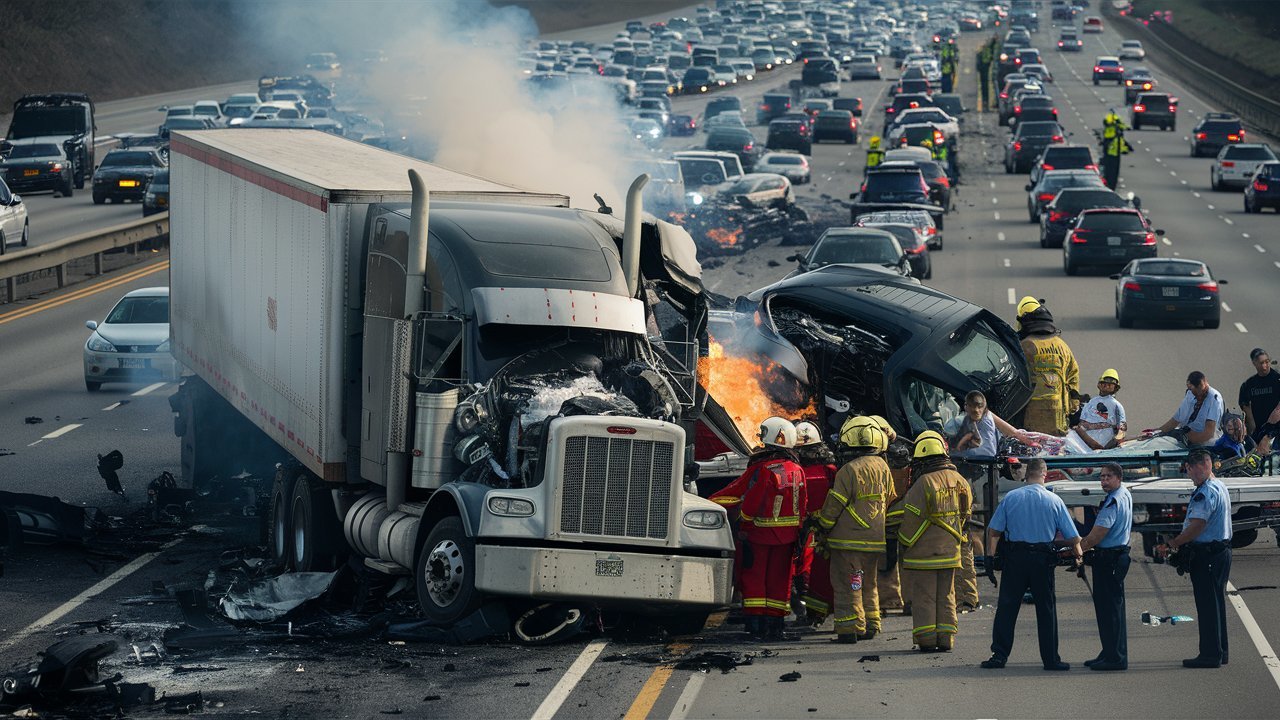
A semi truck accident on a major highway can shut down traffic for hours and leave victims facing life-altering injuries. These collisions often involve complex liability questions that go beyond a typical car crash. Readers exploring semi truck accident will also find context in Henry Olyphant: Career Highlights and Key Roles Explained
How Federal Regulations Shape Truck Safety Standards
The Federal Motor Carrier Safety Administration sets hours-of-service rules limiting how long drivers can operate without rest. These regulations exist because fatigue is a leading factor in serious crashes. Carriers must also maintain vehicles according to strict inspection schedules. When companies or drivers violate these rules, the evidence can become central to a liability claim. The FMCSA updated its electronic logging device mandate in recent years to improve compliance tracking across the industry. wikipedia.org/wiki/Tow_truck” rel=”noopener noreferrer” target=”_blank”>Tow truck
Common Factors Behind Serious Truck Collisions
Driver fatigue, distracted driving, and improper loading rank among the most frequent contributors to a semi truck accident. Mechanical failures such as brake defects also account for a significant share of crashes each year. Road conditions and weather play a role, but human error remains the dominant cause according to federal investigators. Truck size and weight make these vehicles harder to stop, especially on wet or icy pavement. A fully loaded tractor-trailer can weigh up to 80,000 pounds, which dramatically increases stopping distance compared to passenger vehicles.
What Is Confirmed and What Remains Unclear in Crash Investigations
Witness statements and dashcam footage add further clarity in many cases. However, determining exact fault can take weeks or months when multiple parties share responsibility. Disputes sometimes arise over whether a carrier pressured a driver to exceed legal hours. Independent accident reconstruction experts are frequently called in to resolve conflicting accounts. newsbreak.com/trending/top/Semi-Truck-Accidents” rel=”noopener noreferrer nofollow” target=”_blank”>The latest Semi Truck Accidents news, videos & comments | NewsBreak
Why Understanding Truck Accident Liability Matters for Victims
Unlike a standard auto claim, a semi truck accident case may involve the driver, the carrier, a maintenance provider, or even a parts manufacturer. Identifying every responsible party is critical because insurance coverage and settlement amounts depend on it. Consulting an attorney experienced in commercial vehicle litigation can help clarify options before critical deadlines pass.
Frequently Asked Questions
What should I do immediately after a semi truck accident?
Call 911 and seek medical attention even if injuries seem minor. Request a copy of the official police report as soon as it becomes available.
Who can be held liable in a truck crash case?
Liability may extend to the driver, the trucking company, a cargo loader, or a vehicle parts manufacturer. Each party’s role must be examined through logbooks, maintenance records, and inspection reports to determine responsibility.
How long do I have to file a claim after a truck accident?
Statutes of limitations vary by state, but many jurisdictions allow two to three years for personal injury claims. Wrongful death cases may have shorter deadlines. Consulting an attorney early helps preserve evidence and meet all filing requirements.
Can electronic logging devices help prove fault?
Yes, ELD data can reveal whether a driver exceeded hours-of-service limits or made sudden stops. This digital record is often a key piece of evidence in establishing negligence in commercial vehicle litigation.
Are truck accident settlements typically higher than car accident settlements?
They often are, due to the severity of injuries and the multiple parties involved. However, each case depends on specific facts including medical costs, lost income, and the degree of fault assigned to each party.
How Evidence Preservation Shapes the Outcome of a Case
Trucking companies are required to retain certain records for defined periods, but critical evidence can disappear quickly without prompt action. Black box data, driver qualification files, and dispatch communications all carry significant weight in litigation. Attorneys often send spoliation letters to carriers immediately after a crash to prevent the destruction of relevant documents. Physical evidence at the scene, such as skid marks and debris patterns, degrades rapidly with weather and traffic. Prompt legal involvement gives victims the best chance of securing the records needed to support their claims.
How Insurance Coverage Differs in Commercial Truck Claims
Commercial trucking policies typically carry much higher coverage limits than personal auto insurance. Federal law requires interstate carriers to maintain minimum liability coverage of $750,000 to $5,000,000 depending on the cargo type. These higher limits reflect the potential for catastrophic damage in a serious collision. However, insurance disputes are common when multiple policies apply or when a carrier disputes whether the driver was operating within the scope of employment. Understanding the layered insurance structure is essential for victims seeking fair compensation.